Prefab ADU Kits
Build Faster. Use Less Energy. Get More From Your Property.
You already have the space. Now you need a way to build on it without delays, cost overruns, or guesswork.
Mighty Small Homes designs and manufactures premium, American‑made panelized ADU kits that go up faster than traditional construction, reduce energy costs, and give you a distinct path from start to finish, whether you’re working with a contractor or managing the build yourself.


Purpose-Built ADU Kits
Start With What You Need
People come to ADUs for different reasons. Some need a place for a parent to live nearby. Some want to generate rental income. Some want to build it themselves and do it right.
Whatever your goal, you can choose a kit designed to support it.
For Owner-Builders You want to take control of the build. A complete kit helps you do it with confidence, whether it’s a home, office, or workshop. | For Rental Property Owners You’re adding income to property you already own. Faster build times and lower operating costs enhance your return. | For Caregivers You need a safe, comfortable space close to home. A predictable build process helps you eliminate guesswork. |
Panelized Construction
Manufactured Off-Site. Assembled on Your Property.
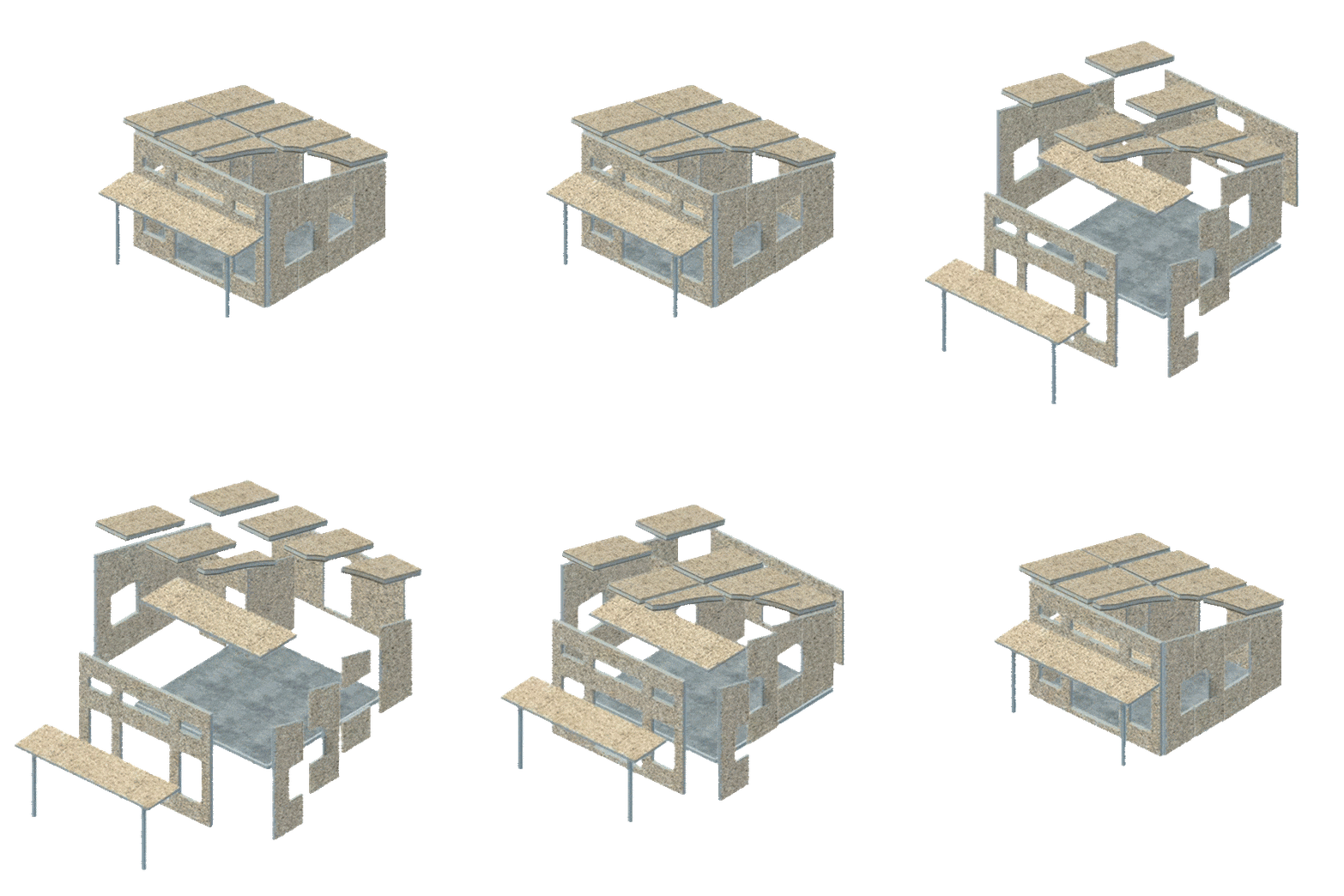
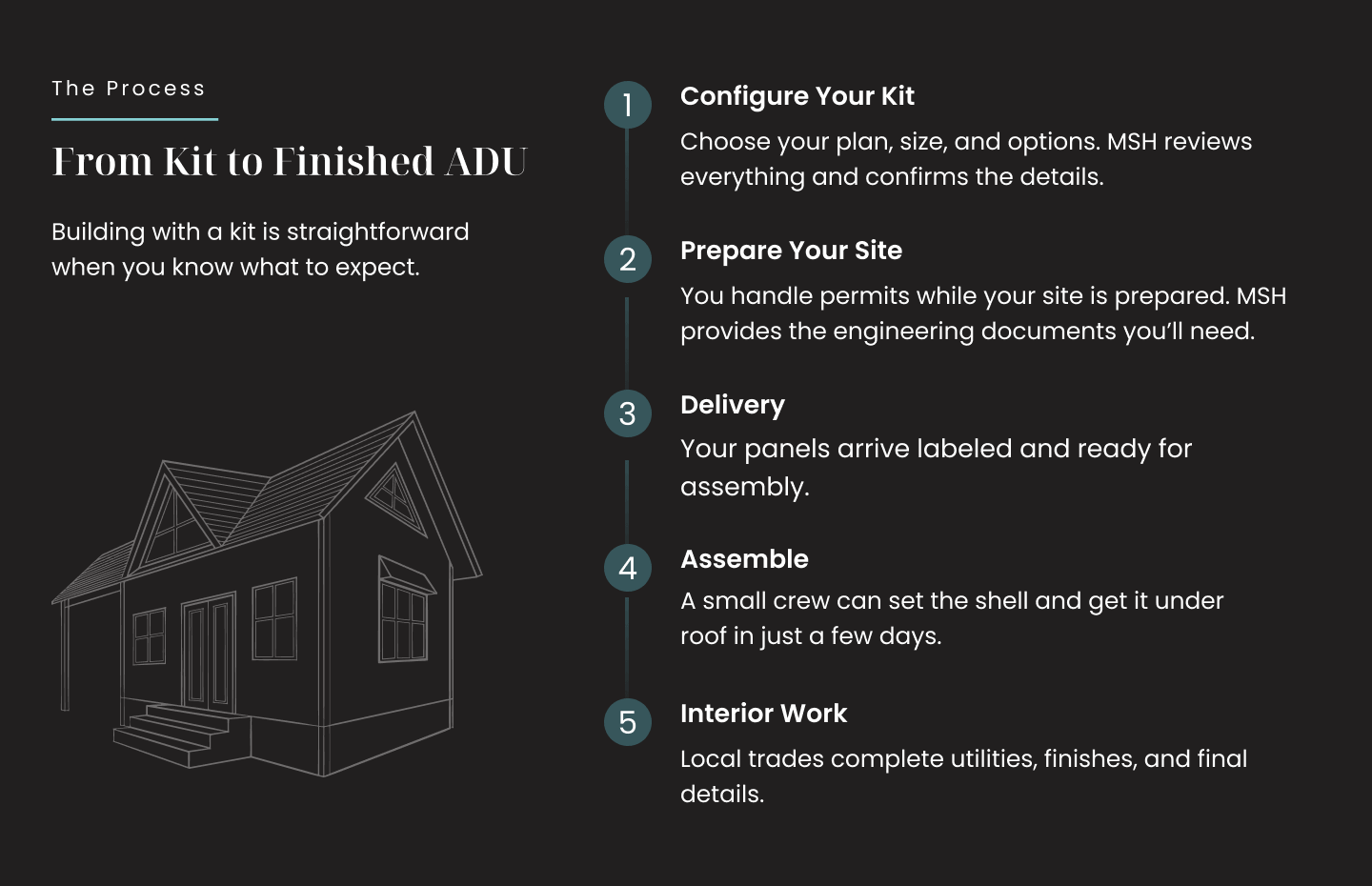
This isn’t a stack of materials, and it’s not a pre-built box. You get precision-engineered panels that arrive ready to assemble, along with drawings that guide the process from day one.
Engineering Behind High Performance Panels
Why It Works
Your kit uses structural insulated panels (SIPs), made with a rigid foam core between two structural OSB facings.
That design helps your home stay stronger, seal tighter, and use less energy than standard stick framing.
Why Homeowners Choose Panelized Construction
Skilled labor is harder to find and more expensive than ever. A panelized kit reduces your reliance on both while giving you a stronger, more efficient home.

Built for Real-World Conditions
Panels are engineered to handle wind, snow, and seismic loads with consistent strength.

Lower Energy Bills
Tight sealing and high insulation help reduce heating and cooling costs, often by up to 60%.

Faster Build Time
The shell can be under roof in days instead of weeks, helping you move forward sooner.

More Predictable Costs
Less on-site labor and fewer material surprises mean better cost control from the start.
ADU KITS FOR SALe
What’s Included and What It Costs
Your total project cost usually lands at two to three times the kit price once foundation, utilities, and finishes are included.
The quote builder gives you the kit cost. Your local contractors define the rest based on your site.
What’s Included in the Structural Shell Kit
- Your kit arrives ready to assemble
- SIP wall and roof panels designed for your floor plan
- Structural headers, ridge beams, and connection hardware
- Specialty tools
- Assembly guide and layout drawings
Options
- Windows, doors
- Garage packages
- Porch additions
- Roofing
- HVAC system
- Interior finishes
- Upgrades
What You’ll Source Locally
These depend on your site and local requirements.
- Foundation and site prep
- Electrical, plumbing, and HVAC
- Interior finishes and fixtures
Shipping varies based on location.
Choosing Your Model
Find the Right Fit for Your Property
Every property is different. When you’re ready, you’ll get guidance on which model fits your space, your goals, and your timeline.
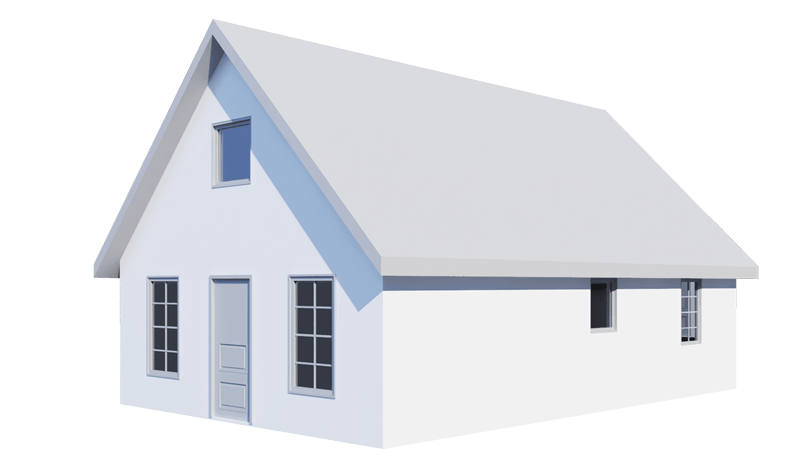
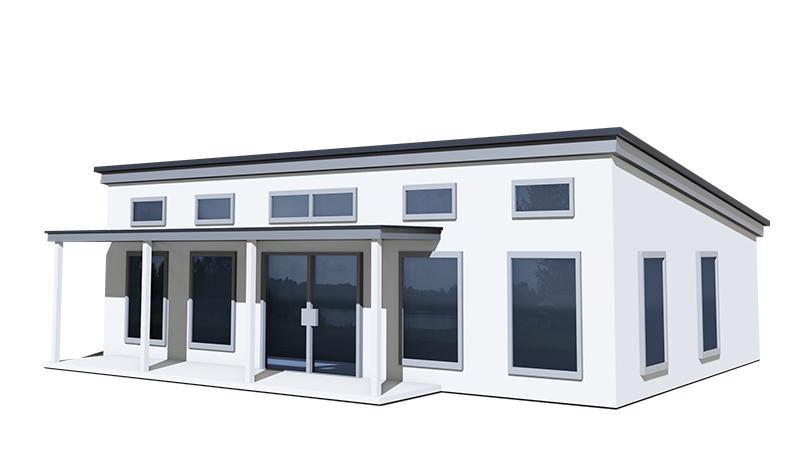
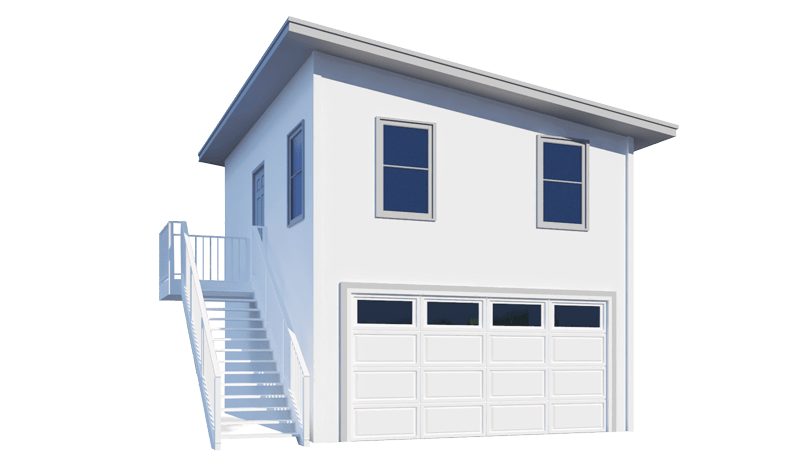
Customer Builds
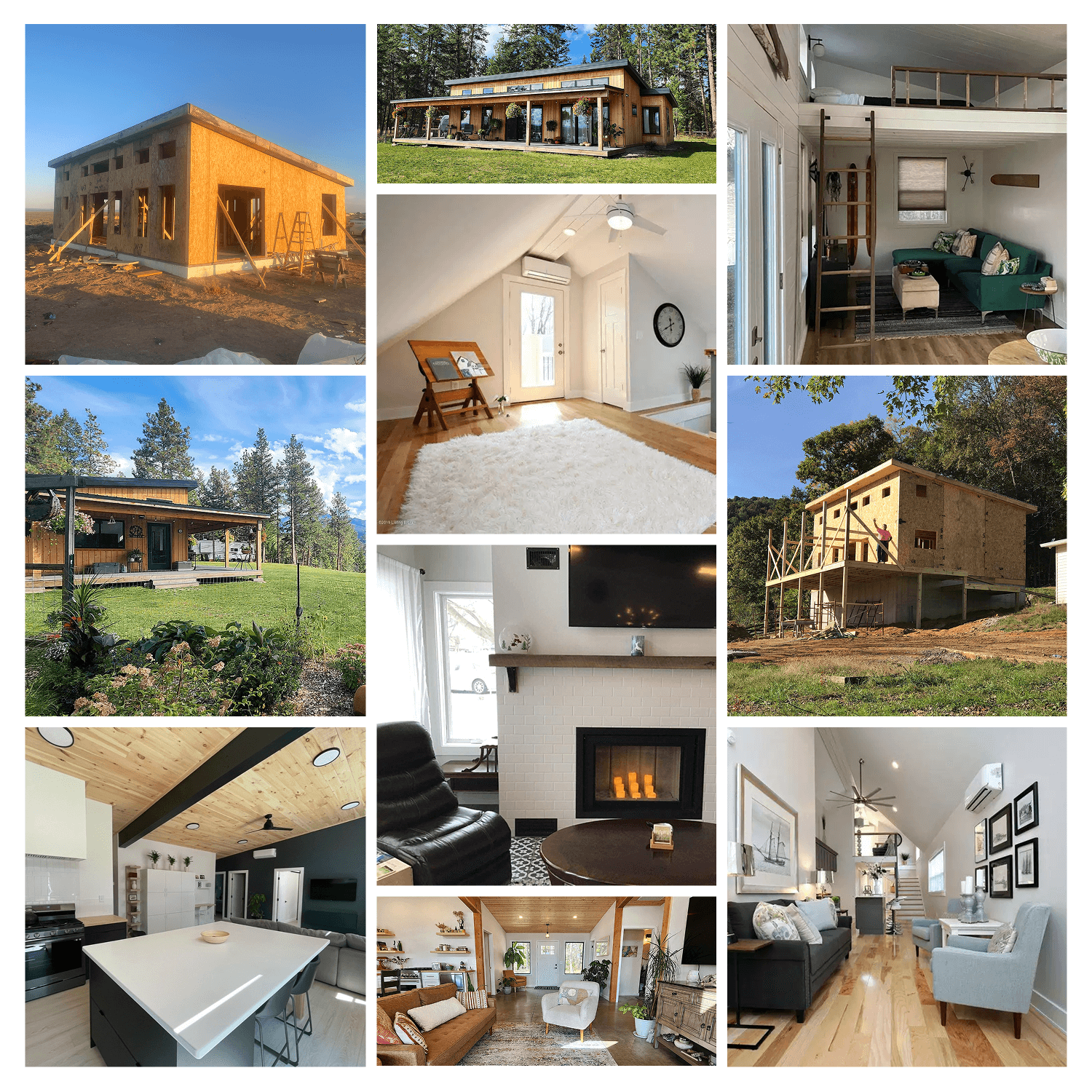
See What Others Have Built
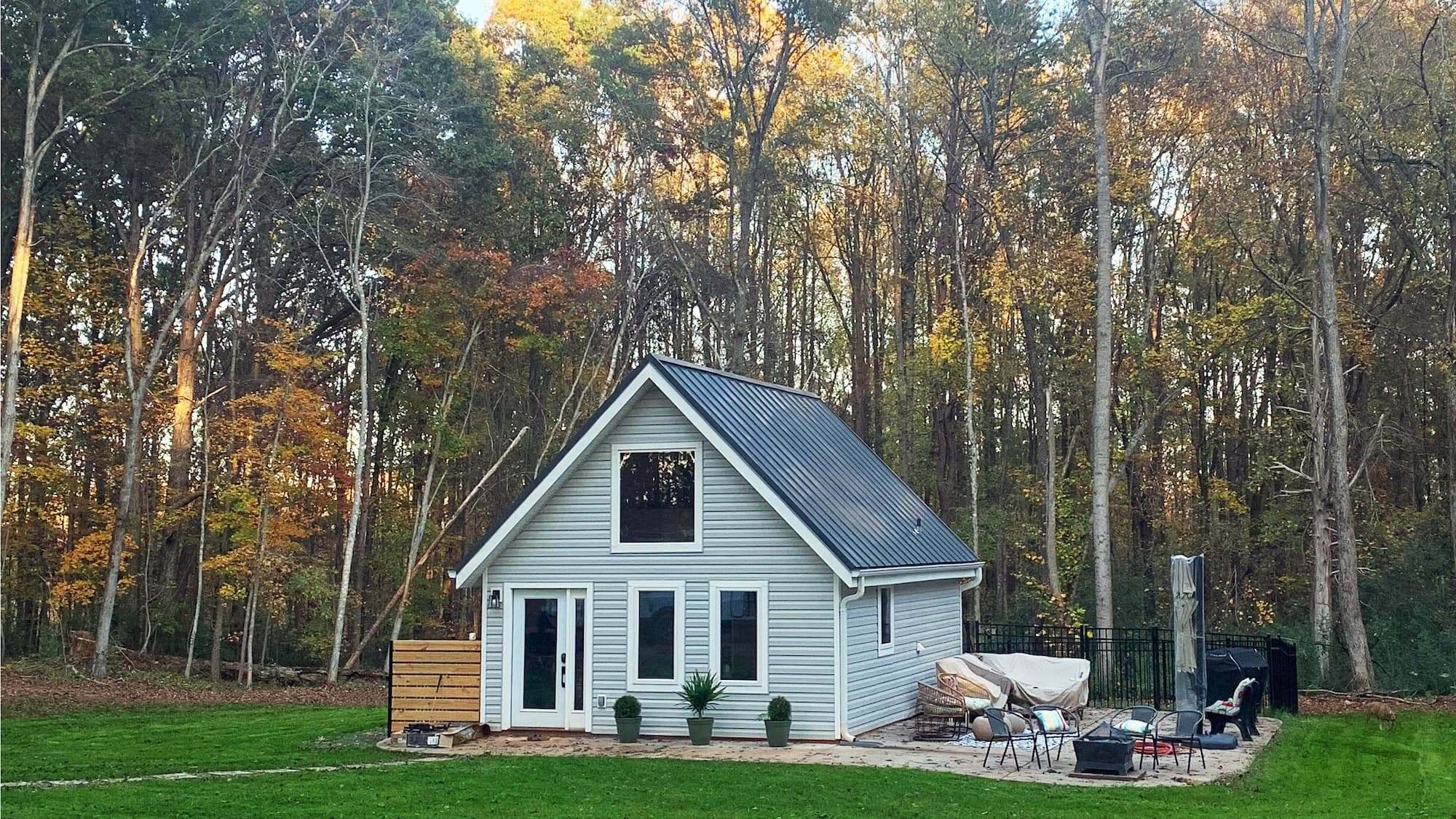
Explore completed homes and builds in progress. See how different customers used their kits to create spaces that fit their needs.
Questions Buyers Ask Before They Commit
No. You receive the structural kit. Site work, utilities, and finishes are handled locally.
Yes, with a small crew. Assembly requires equipment and basic construction experience, but many owners-builders complete their projects without a general contractor.
MSH provides engineering documents. Permits are handled locally.
Rules vary by location. Your local planning department will confirm what’s allowed.
Panels are engineered to meet structural code requirements and include supporting documentation.
Panels meet or exceed standard framing requirements and perform well under typical load conditions.
The structure supports it. Local regulations determine whether it’s allowed.